Nattokinase benefits for circulation: the Boostaro guide

Updated August 2026 · reviewed by the Boostaro Research Team. We are an independent information resource, not a medical provider, and this article is educational rather than medical advice.
Nattokinase is a fermented-soy enzyme, drawn from a traditional Japanese food called natto, and it has spent decades in circulation research because of one intriguing property: in the laboratory it helps break down fibrin, the protein that gives a clot its structure. That fibrinolytic activity is why nattokinase has become a quietly popular circulatory-wellness ingredient — and why it earns a place in Boostaro alongside the nitric-oxide nutrients that do most of the heavy lifting.
Nattokinase and circulation, honestly summarised.
- What it is
- An enzyme extracted from natto, made by fermenting soybeans with Bacillus subtilis; the ferment, not the bean, creates it.
- What draws interest
- In the lab it shows fibrinolytic activity — it helps break down fibrin, the mesh inside a clot — which is why it is studied for circulation.
- Evidence status
- Promising but preliminary. Small human studies are encouraging; large long-term trials are still limited.
- Who should be cautious
- Anyone on blood thinners, with a bleeding disorder, or facing surgery should talk to a doctor first.
If you have scanned the label on Boostaro, nattokinase is one of the more unusual names on it — less familiar than L-citrulline or vitamin C, and worth understanding on its own terms. This guide explains what the enzyme is, where its reputation comes from, what the research actually shows, and where it sensibly fits alongside diet, movement and the rest of the formula.
What exactly is nattokinase?
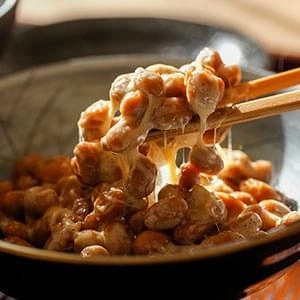
Nattokinase is an enzyme produced when soybeans are fermented with the bacterium Bacillus subtilis to make natto, a sticky, pungent breakfast food eaten in Japan for more than a thousand years. It was first isolated and named in the 1980s by researcher Hiroyuki Sumi, who was screening foods for fibrinolytic activity — the ability to dissolve fibrin — and found that natto stood out dramatically. The key point is that the enzyme is a product of fermentation, not something present in the raw soybean, which is why it is described as a fermented-soy enzyme rather than a soy protein or isoflavone.
In a supplement, the enzyme is extracted from the natto and standardised so that each serving delivers a known amount of activity. That activity is measured in fibrinolytic units, or FU, rather than milligrams alone, because what matters is how much clot-dissolving action the enzyme carries, not just its weight.
Why is nattokinase linked to circulation?
Nattokinase is linked to circulation because of its fibrinolytic activity: in laboratory conditions it can break down fibrin, the stringy protein your body weaves to form the framework of a blood clot. Healthy circulation depends on a careful balance between forming clots when you are injured and clearing them once they are no longer needed. The natural enzyme system that does the clearing is called fibrinolysis, and plasmin is its main player. Nattokinase is of interest because, in the test tube, it appears to support that clearing side of the balance.
It is important to be precise here. Most of the strongest data on nattokinase comes from laboratory and animal work, where its enzymatic behaviour is clear. Translating that into everyday circulatory benefits in people is where the science becomes more cautious, and where honest guides — this one included — stop short of promises. Nattokinase is best understood as a traditional ingredient with a plausible mechanism and encouraging early research, not as a proven remedy for any condition.
What does the evidence actually show?
The honest summary is that the evidence for nattokinase is promising but still early. A number of small human studies have reported that nattokinase can influence markers connected to blood flow — for example, measures related to fibrinogen or to how readily blood clots form in a lab assay — and some short trials have looked at blood pressure and circulation. Reviews of this literature generally reach the same verdict: the mechanism is credible and the early signals are interesting, but the studies tend to be small, short and varied in quality, so firm conclusions are not yet possible. Weng and colleagues, International Journal of Molecular Sciences (2017) reviewed nattokinase as an orally administered agent studied for cardiovascular applications. In one randomised controlled trial, Kim and colleagues, Hypertension Research (2008) reported a reduction in blood pressure with nattokinase supplementation.
This is exactly why an ingredient like nattokinase belongs in a supportive, multi-nutrient formula rather than being sold as a standalone cure. It contributes a distinct angle — the fibrinolytic side of circulation — that complements the nitric-oxide nutrients doing the vasodilation work. The table below lays out the difference between what is reasonably established and what is still speculative.
| Claim about nattokinase | Evidence status | How to read it |
|---|---|---|
| Shows fibrinolytic activity in the lab | Well established | Consistently demonstrated in vitro |
| Survives digestion in active form | Debated | Some absorption data; not fully settled |
| Supports healthy blood-flow markers | Early / mixed | Small human studies; larger trials needed |
| Treats or prevents any disease | Not supported | No such claim should be made |
See the exact dose in Boostaro →
Natto the food versus nattokinase the supplement
Natto the food and nattokinase the supplement are related but not interchangeable. Natto is a whole food: fermented soybeans with a famously ammonia-like smell, a sticky texture and a taste that many people outside Japan struggle to enjoy every morning. It also contains other compounds, including vitamin K2, fibre and soy protein. Supplemental nattokinase, by contrast, isolates and concentrates just the enzyme and standardises it in fibrinolytic units, so you get a consistent, measurable amount without the flavour or the guesswork. Our guide to vitamin K2 and heart health goes into this in more detail.
For most people in Western countries, a standardised supplement is simply the practical way to include the enzyme in a daily routine. That is the role it plays in Boostaro, where a set dose is delivered in the same twice-daily capsule as the rest of the formula.
| Feature | Natto (food) | Nattokinase (supplement) |
|---|---|---|
| Form | Whole fermented soybeans | Isolated, standardised enzyme |
| Dose consistency | Varies batch to batch | Measured in fibrinolytic units (FU) |
| Taste & smell | Strong, acquired | None — taken in a capsule |
| Other nutrients | Vitamin K2, fibre, protein | Mostly the enzyme itself |
| Everyday practicality | Hard outside Japan | Simple daily routine |
How does nattokinase fit into Boostaro?
In Boostaro, nattokinase is a supporting player in a circulation-focused team rather than the star. The formula is built primarily around L-citrulline and pine bark extract, which feed the nitric-oxide pathway your vessels use to relax and widen. Nattokinase adds the complementary fibrinolytic angle, while vitamin K2 — the same vitamin abundant in natto itself — supports how the body directs calcium. The logic is the one we return to across this site: a small group of nutrients supporting one goal, healthy circulation, from several directions at once. CoQ10 is one of those partners, and we compare CoQ10 versus ubiquinol in its own article. In a randomised controlled trial, Hodis and colleagues, Clinical Hemorheology and Microcirculation (2021) followed carotid measurements in adults taking nattokinase.
Boostaro is taken as two capsules a day, which keeps the whole team topped up steadily rather than in a single large hit. If you want the full breakdown of how the ingredients work together, our nitric oxide and male vitality guide covers the vasodilation side in detail, and the ingredients section of the main review lists every component.

Circulation support, made simple
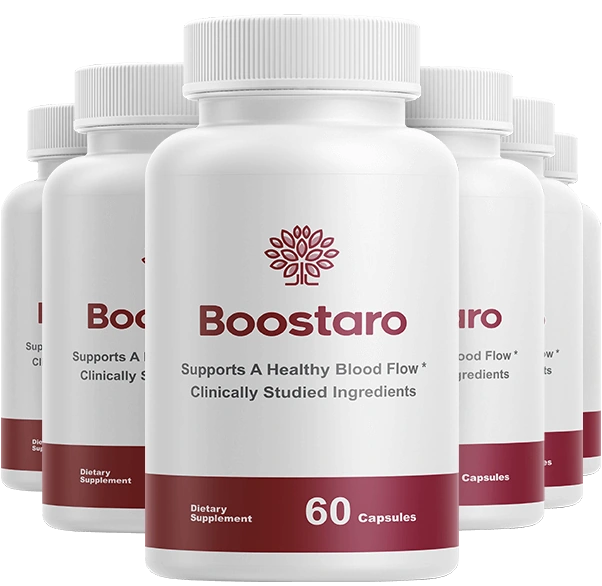
Boostaro is a twice-daily capsule that pairs nattokinase with L-citrulline, pine bark, vitamin C and CoQ10. The six-bottle bundle is the best value at $49 per bottle, with free U.S. shipping and a 180-day guarantee.
Check today’s Boostaro pricing — from $49/bottleHow much nattokinase do people use?
Supplemental nattokinase is dosed by activity, and studies have commonly used amounts in the region of a couple of thousand fibrinolytic units per day, often written as 2,000 FU. Because activity, not weight, is what counts, two products with the same milligram figure can differ in strength — which is why standardisation to FU matters and why you should always follow the directions on the specific product you choose rather than assuming a number from elsewhere.
As with the other nutrients in a circulation formula, the benefits people are usually after are the everyday, cumulative kind. Those build with consistent daily use over weeks, alongside the lifestyle basics — movement, sleep, and a diet rich in the best foods for blood flow — rather than from a single serving.
Is nattokinase safe, and who should be careful?
For most healthy adults, nattokinase is generally well tolerated, but its very mechanism means some people must be cautious. Because the enzyme can influence how readily blood clots, it should not be combined casually with blood-thinning or antiplatelet medication (such as warfarin, aspirin or clopidogrel), and anyone with a bleeding disorder, uncontrolled blood pressure, or an upcoming surgery or dental procedure should speak with a doctor first. It is intended for adults, and is not recommended during pregnancy or breastfeeding without medical guidance.
People with a genuine soy allergy should also check the label and consult a professional, since the enzyme is derived from fermented soy. None of this is a reason for alarm — it is the ordinary due diligence any circulatory ingredient deserves. Nattokinase is a support to a healthy lifestyle, not a substitute for medical care or prescribed treatment.

Frequently asked questions
What is nattokinase and where does it come from?
Nattokinase is an enzyme extracted from natto, a traditional Japanese food made by fermenting soybeans with the bacterium Bacillus subtilis. It is the fermentation step, not the soybean itself, that produces the enzyme, which is why nattokinase is described as a fermented-soy enzyme rather than a plain soy protein.
What are the main nattokinase benefits people look for?
Most interest in nattokinase centres on circulatory wellness. In laboratory settings it shows fibrinolytic activity, meaning it can help break down fibrin, the protein that forms the mesh of a clot. People take it hoping to support normal blood flow and healthy circulation, though human evidence is still early and it is not a treatment for any medical condition. There is a fuller companion piece on what L-lysine and L-proline do for blood vessels.
Is nattokinase the same as eating natto?
No. Natto is a whole food with a strong smell and sticky texture that many people outside Japan find hard to eat daily. Supplemental nattokinase isolates the enzyme and standardises it in fibrinolytic units (FU), so you get a consistent amount without the taste, which is how it appears in formulas like Boostaro.
How strong is the evidence for nattokinase?
The evidence is promising but preliminary. Laboratory and small human studies suggest nattokinase has fibrinolytic activity and may support markers related to circulation, but large, long-term trials are limited. It should be viewed as a traditional, research-referenced ingredient rather than a proven remedy.
Who should avoid nattokinase or check with a doctor first?
Because nattokinase can influence how blood clots, anyone taking blood thinners, antiplatelet drugs or blood-pressure medication, anyone with a bleeding disorder, and anyone scheduled for surgery should speak with a doctor before using it. It is intended for adults and is not suitable during pregnancy or breastfeeding without medical guidance.
How does nattokinase fit into Boostaro?
In Boostaro, nattokinase sits alongside nitric-oxide-supporting nutrients such as L-citrulline and pine bark extract, plus vitamin K2. The idea is a small team of ingredients supporting healthy circulation from several angles at once, taken as a twice-daily capsule as part of a healthy lifestyle. For the detail behind that, see our guide to pine bark extract and blood flow.
Try Boostaro risk-free for 180 days →
Boostaro is a dietary supplement, not a treatment for any medical condition. These statements have not been evaluated by the Food and Drug Administration. This product is not intended to diagnose, treat, cure or prevent any disease. Always consult a qualified healthcare professional about your individual needs, particularly if you take medication that affects blood clotting.
References & further reading
- Examine.com. Nattokinase — evidence-based summary. examine.com/supplements/nattokinase
- Weng Y, et al. Nattokinase: An Oral Antithrombotic Agent for the Prevention of Cardiovascular Disease. PubMed / U.S. National Library of Medicine. pubmed.ncbi.nlm.nih.gov/28264497
- Kim JY, et al. Effects of nattokinase on blood pressure: a randomized, controlled trial. Hypertens Res. 2008. pubmed.ncbi.nlm.nih.gov/18971533
- Hodis HN, et al. Nattokinase atherothrombotic prevention study: A randomized controlled trial. Clin Hemorheol Microcirc. 2021. pubmed.ncbi.nlm.nih.gov/33843667
- National Center for Complementary and Integrative Health (NCCIH). Soy. nccih.nih.gov/health/soy
- National Institutes of Health, Office of Dietary Supplements. Vitamin K — Fact Sheet for Health Professionals. ods.od.nih.gov/factsheets/VitaminK-HealthProfessional
These references describe the ingredient in general terms and do not constitute evidence that any product treats, cures or prevents any condition.
Keep reading: how L-citrulline supports healthy blood flow · nitric oxide and male vitality · back to the Boostaro blog · read the full Boostaro review.