CoQ10 vs ubiquinol: which form of CoQ10 does Boostaro use?

Updated August 2026 · reviewed by the Boostaro Research Team. We are an independent information resource, not a medical provider, and this article is educational rather than medical advice.
CoQ10 and ubiquinol are not two rival nutrients — they are two forms of the same molecule, coenzyme Q10, which your cells constantly switch back and forth. Ubiquinone is the oxidised form usually sold simply as “CoQ10,” and ubiquinol is its reduced counterpart. Knowing the difference is the key to reading a label like Boostaro’s and understanding exactly what you are getting.
CoQ10 vs ubiquinol, in one place.
- Are they different?
- No — both are CoQ10. Ubiquinone is the oxidised form; ubiquinol is the reduced form. The body converts one into the other.
- Which absorbs better?
- Evidence is mixed. Ubiquinol may have an edge in some people, but formulation, dose and taking it with fat often matter more.
- How to read a label
- Check the Supplement Facts panel for “coenzyme Q10 (ubiquinone)” or “ubiquinol” and the milligram dose per serving.
- Typical amounts
- Studies often use roughly 100–200 mg per day; product labels vary, so follow the directions you are given.
If you are weighing CoQ10 against ubiquinol on a shelf — or trying to work out what sits inside a blood-flow formula like Boostaro — the choice can feel more complicated than it needs to be. This guide untangles the two forms in plain language: what coenzyme Q10 actually does, how ubiquinone and ubiquinol differ, whether one is genuinely better absorbed, and, most usefully, how to read a Supplement Facts panel so the label answers the question for you. There is a fuller companion piece on nattokinase and circulation.

What is CoQ10, and what does it do?
Coenzyme Q10 (CoQ10) is a vitamin-like compound your body makes on its own and stores in nearly every cell, with the highest concentrations in energy-hungry tissues such as the heart. Its central job happens inside the mitochondria, the tiny power plants of the cell, where it shuttles electrons along the chain that produces ATP — the fuel your cells run on. Without CoQ10, that energy-production line stalls.
CoQ10 has a second role that matters for circulation: it is a fat-soluble antioxidant that helps protect cell membranes and other molecules — including the nitric oxide that keeps blood vessels relaxed and open — from oxidative damage. That mix of energy support and antioxidant protection is why CoQ10 appears so often in formulas aimed at heart health and healthy blood flow. Natural levels also decline with age, which is part of why it interests men in their forties and beyond. Most of the vascular research uses conventional CoQ10 rather than one specific form; Daei and colleagues, High Blood Pressure & Cardiovascular Prevention (2024) is a representative meta-analysis of endothelial outcomes.
What is the difference between ubiquinone and ubiquinol?
Ubiquinone and ubiquinol are the two chemical states CoQ10 moves between as it does its work. Ubiquinone is the oxidised form; when it accepts electrons it becomes ubiquinol, the reduced form; when ubiquinol hands those electrons on, it converts back to ubiquinone. This constant flipping is not a flaw — it is precisely how CoQ10 carries electrons through the mitochondria. In a healthy body, most of the CoQ10 circulating in your blood is actually in the ubiquinol form. In a direct comparison, Langsjoen and Langsjoen, Clinical Pharmacology in Drug Development (2014) measured plasma CoQ10 in healthy subjects supplemented with ubiquinol versus ubiquinone.
Because your cells interconvert the two forms continuously, taking one does not lock you into it. Swallow ubiquinone and your body reduces a share of it to ubiquinol; swallow ubiquinol and some is oxidised to ubiquinone. The label tells you which form went into the capsule, not the only form your body will ever see from it.
Is ubiquinol really better absorbed than CoQ10?
Ubiquinol is often marketed as the more “bioavailable” or “active” form of CoQ10, and there is a reasonable rationale for it: since ubiquinol is the form that predominates in the blood, a supplement that delivers it may seem a shorter route. Some studies do report higher blood CoQ10 after ubiquinol, particularly in older adults whose ability to reduce ubiquinone may be lower. But the picture is genuinely mixed — other well-run comparisons find little practical difference once dose and formulation are matched. Pravst and colleagues, Nutrients (2020) compared the bioavailability of several different CoQ10 formulations in healthy older adults.
Two points are easy to lose in the marketing. First, ubiquinone has decades of research behind it and reliably raises CoQ10 levels when taken properly. Second, how a product is formulated — whether the CoQ10 is dissolved in oil or taken with a fatty meal — frequently influences absorption more than which form is on the label. For most people, a well-made ubiquinone and a well-made ubiquinol land in a similar place.
| Feature | Ubiquinone (“CoQ10”) | Ubiquinol |
|---|---|---|
| Chemical state | Oxidised form | Reduced form |
| Usual label name | Coenzyme Q10 / CoQ10 | Ubiquinol |
| Research history | Extensive, decades long | Newer, growing |
| Absorption | Reliable, especially with fat | May have an edge in some, mixed data |
| Typical cost | Lower | Often higher |
| Stability | More stable on the shelf | Less stable; needs careful formulation |
Ubiquinol’s lower shelf stability is a practical wrinkle worth knowing: because it is the reduced form, it can slowly oxidise back toward ubiquinone in the bottle unless it is well protected. That is one reason a stable, well-formulated ubiquinone remains a sensible, cost-effective choice for many supplements.
See the exact dose in Boostaro →
How do you read a label like Boostaro’s for CoQ10?
The Supplement Facts panel is the only place that tells you, with certainty, which CoQ10 form a product uses and how much it supplies. Marketing copy on the front of a box can say “with CoQ10” without committing to a form or a dose — the panel on the back cannot. When you compare products, that panel is where the real comparison lives.
Where is the form actually written?
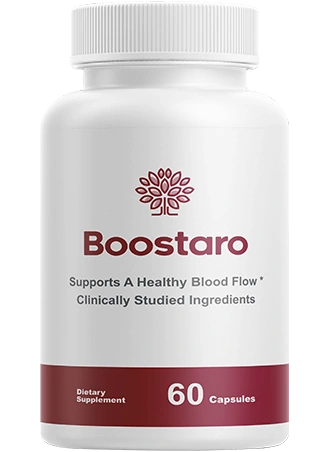
Look in the ingredient line for coenzyme Q10. A product using the oxidised form typically prints “Coenzyme Q10 (ubiquinone)” or simply “CoQ10.” A product using the reduced form prints “Ubiquinol,” sometimes noting it is a branded reduced-CoQ10 material. If the panel only says “CoQ10” with no qualifier, it is almost always ubiquinone, the standard form.
What numbers should you check?
Two numbers matter: the milligram amount per serving, and the serving size (how many capsules you take to get it). A label listing 100 mg per two capsules is not the same as 100 mg per capsule. To see the precise coenzyme Q10 amount and the rest of the formula around it, read Boostaro’s own ingredient panel rather than relying on any summary, this one included.
What sits alongside the CoQ10?
CoQ10 rarely works alone in a blood-flow formula. It is usually paired with the nitric-oxide building blocks and antioxidants that support the vessel lining. In Boostaro, coenzyme Q10 sits beside L-citrulline, pine bark extract and vitamin C — a small team aimed at one pathway from several angles. If you want the mechanism behind that pairing, our companion guide on CoQ10 benefits for blood flow and energy goes deeper. Our guide to L-citrulline compared with L-arginine goes into this in more detail.
Does the CoQ10 form matter for most people?
For most healthy adults, choosing between ubiquinone and ubiquinol is a smaller decision than the marketing implies. What consistently moves the needle is taking an adequate dose, taking it with some dietary fat, and taking it consistently over weeks rather than days. A person who takes a modest ubiquinol dose erratically will likely do worse than someone taking a solid ubiquinone dose every day with breakfast.
There are situations where the form may be worth more thought — older adults, or people with certain conditions who may convert ubiquinone less efficiently, are the groups most often cited as potentially benefiting from ubiquinol. Even then, the evidence is suggestive rather than settled, and it is a conversation to have with a healthcare professional who knows your history.
How much CoQ10 do people take, and when?
Research on CoQ10 has most commonly used doses in the region of 100 to 200 mg per day, though studies range more widely depending on the goal, and product labels vary just as much. There is no single “correct” number that applies to everyone, which is exactly why following the directions on the specific product you choose — rather than a figure from an article — is the right approach.
| Question | Practical guidance |
|---|---|
| How much? | Studies often use ~100–200 mg/day; follow your product’s label |
| With or without food? | With a meal containing some fat, to aid absorption |
| What time of day? | Consistency matters more than clock time; many prefer morning |
| How long to judge it? | Give it several weeks of daily use, not days |
| Ubiquinone or ubiquinol? | Either can work; formulation and consistency matter most |
Because CoQ10 is fat-soluble, pairing it with a meal is a simple, no-cost way to help either form absorb — and it is why many quality supplements are built into an oil base. Boostaro is taken as two capsules a day, which keeps the coenzyme Q10 and the nutrients around it topped up on a steady daily rhythm.
See the CoQ10 in context
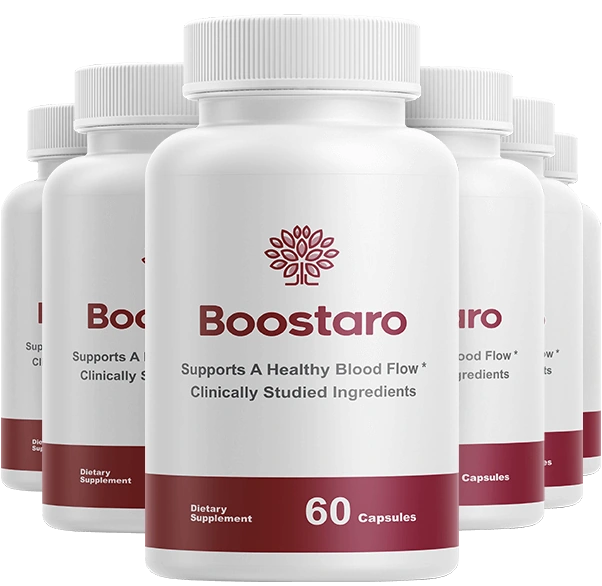
Boostaro is a twice-daily capsule built around L-citrulline, pine bark, vitamin C and coenzyme Q10. The six-bottle bundle is the best value at $49 per bottle, with free U.S. shipping and a 180-day guarantee.
Check today’s Boostaro pricing — from $49/bottleWhen should you talk to a doctor?
CoQ10, in both its ubiquinone and ubiquinol forms, is generally well tolerated at typical supplement doses. Even so, it is not a decision to make in isolation if you have a medical history. CoQ10 can interact with blood-thinning medication such as warfarin, and it may modestly affect blood pressure, so speak with your doctor before starting it if you take those medicines, manage a heart condition, or are on any prescription. It is intended for adults, and it is a support to a healthy lifestyle — not a treatment for any medical condition. We look at whether Boostaro raises testosterone separately, if you want the longer version.
Frequently asked questions
Is ubiquinol the same as CoQ10?
Ubiquinol is a form of CoQ10, not a different nutrient. CoQ10 exists in two interchangeable states in the body: ubiquinone, the oxidised form, and ubiquinol, the reduced form. Your cells constantly switch one into the other, so both are CoQ10.
Which is better absorbed, ubiquinone or ubiquinol?
Some studies suggest ubiquinol is absorbed more readily, especially in older adults, but results are mixed and both forms can raise blood CoQ10 levels. Formulation, dose and whether it is taken with fat often matter more than the form printed on the label.
What form of CoQ10 does Boostaro use?
To know the exact form and amount, read Boostaro’s own Supplement Facts panel, which lists coenzyme Q10 among its ingredients. Labels state whether a product supplies ubiquinone or ubiquinol and the milligram dose per serving, so the panel is the definitive source.
How much CoQ10 do people usually take?
Research commonly studies CoQ10 in the range of roughly 100 to 200 mg per day, though amounts vary widely by product and purpose. Follow the directions on the label you choose and speak with your doctor if you take medication.
Should I take CoQ10 with food?
CoQ10 is fat-soluble, so taking it with a meal that contains some fat can improve absorption of either form. Many supplements are formulated with oils for the same reason. Consistency day to day tends to matter more than timing.
Is one CoQ10 form safer than the other?
Both ubiquinone and ubiquinol are generally well tolerated at typical supplement doses. If you take blood thinners such as warfarin, blood-pressure medication or have a medical condition, speak with your doctor first, because CoQ10 can interact with some drugs.
Try Boostaro risk-free for 180 days →
Boostaro is a dietary supplement, not a treatment for any medical condition. These statements have not been evaluated by the Food and Drug Administration. This product is not intended to diagnose, treat, cure or prevent any disease. Always consult a qualified healthcare professional about your individual needs.
References & further reading
- National Center for Complementary and Integrative Health (NCCIH). Coenzyme Q10. nccih.nih.gov/health/coenzyme-q10
- National Institutes of Health, Office of Dietary Supplements. Dietary supplements for exercise and athletic performance — Coenzyme Q10. ods.od.nih.gov/factsheets/ExerciseAndAthleticPerformance-HealthProfessional
- Mayo Clinic. Coenzyme Q10 — drugs and supplements. mayoclinic.org/drugs-supplements-coenzyme-q10
- Examine.com. Coenzyme Q10 — evidence-based summary. examine.com/supplements/coenzyme-q10
- Langsjoen PH, Langsjoen AM. Comparison study of plasma coenzyme Q10 levels in healthy subjects supplemented with ubiquinol versus ubiquinone. Clin Pharmacol Drug Dev. 2014. pubmed.ncbi.nlm.nih.gov/27128225
- Pravst I, et al. Comparative Bioavailability of Different Coenzyme Q10 Formulations in Healthy Elderly Individuals. Nutrients. 2020. pubmed.ncbi.nlm.nih.gov/32188111
These references describe the ingredients in general terms and do not constitute evidence that any product treats, cures or prevents any condition.
Keep reading: CoQ10 benefits for blood flow and energy · how L-citrulline supports healthy blood flow · back to the Boostaro blog · homepage.