CoQ10 benefits for men: the cellular energy engine inside Boostaro
Updated August 2026 · reviewed by the Boostaro Research Team. We are an independent information resource, not a medical provider, and this article is educational rather than medical advice.
Coenzyme Q10 — CoQ10 for short — is the ingredient in Boostaro that works one level deeper than blood flow itself: it helps your cells actually make energy, and it protects the tissues doing the hardest work. It is a small, fat-soluble compound the body already produces, and it sits at the exact point where nutrients are converted into the usable fuel that keeps a hard-working heart, vessel wall and muscle running.
CoQ10 and everyday male vitality, in one place.
- What it is
- A vitamin-like compound your mitochondria use to turn food into cellular energy (ATP).
- What it does
- Powers energy production and acts as an antioxidant, protecting cells and the vessel lining from oxidative stress.
- Link to blood flow
- By defending nitric oxide and the endothelium, it supports the pathway behind healthy circulation — it does not replace it.
- Timeframe
- Levels climb over days to weeks of consistent use, and natural CoQ10 tends to fall with age.
If you have scanned the label on Boostaro, CoQ10 sits alongside L-citrulline and pine bark for a reason. Citrulline feeds the pathway that opens your vessels; CoQ10 keeps the cells inside those vessels — and the muscles they feed — powered and protected. This guide explains, in plain language, how it makes energy, how it defends blood flow as an antioxidant, why it declines with age, which form matters, and how much people use.
What is CoQ10, and what does it actually do?
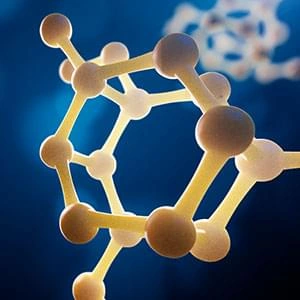
CoQ10 is a fat-soluble, vitamin-like compound found in nearly every cell, with the highest concentrations in tissues that demand the most energy. It has two jobs that matter here: it carries electrons in the mitochondrial “assembly line” that produces cellular energy, and it acts as an antioxidant that neutralizes reactive molecules created as a by-product of that same process.
Where does your body make energy?
Almost all of your usable energy is made inside mitochondria, the microscopic power plants packed into each cell. There, a chain of proteins passes electrons down a line to produce ATP, the molecule your cells spend as currency, and CoQ10 is one of the shuttles carrying those electrons between stations. Without enough of it, that assembly line runs less efficiently — which is why the tissues most dependent on steady energy are the ones richest in CoQ10. We look at the link between blood flow and energy levels separately, if you want the longer version.
How does CoQ10 support blood flow?
CoQ10 supports blood flow indirectly, by protecting the machinery that keeps vessels open rather than by widening them itself. Healthy circulation depends on nitric oxide, a short-lived molecule made by the vessel lining that tells the wall to relax. Nitric oxide is easily degraded by oxidative stress, and this is where a fat-soluble antioxidant earns its place: by helping defend the endothelium and the nitric oxide it produces, CoQ10 helps the pathway work as intended. A meta-analysis of randomised controlled trials by Gao and colleagues, Atherosclerosis (2012) examined the effect of CoQ10 on vascular endothelial function in humans.
This is an important distinction to keep honest: CoQ10 is not a nitric-oxide donor and does not replace L-citrulline — it plays a supporting, protective role, which is why thoughtful formulas pair the two.
Why does CoQ10 decline as men age?
Your body makes CoQ10 on its own, but that internal production tends to fall from your forties onward, and levels can also be lower in people who use certain medications. Because the heart, vessels and muscle carry the highest concentrations, a gradual decline is felt most where energy demand is highest — one reason interest in CoQ10 rises in the years when stamina and circulation become more of a focus. Some medicines lower circulating CoQ10 as well, which is why Qu and colleagues, Journal of the American Heart Association (2018) pooled randomised trials of CoQ10 in people with statin-induced muscle symptoms.
| Life stage | What tends to happen to CoQ10 | Why it matters |
|---|---|---|
| 20s–30s | Internal production is at its peak | Energy and recovery usually feel effortless |
| 40s | Natural synthesis begins to taper | Interest in support typically starts here |
| 50s–60s | Levels continue to drift lower | High-demand tissues feel it most |
| Any age on certain meds | Some drugs can lower CoQ10 status | A reason to ask your doctor about it |
See the exact CoQ10 dose in Boostaro →
Ubiquinone vs ubiquinol — which form of CoQ10 matters?
CoQ10 exists in two interchangeable forms, and your body constantly converts between them as it works. Ubiquinone is the oxidized form; ubiquinol is the reduced, active form. When CoQ10 acts as an antioxidant it hands off electrons and shifts between the two states, so both are part of the same cycle rather than rival ingredients.
Ubiquinone is the more widely studied and affordable form, and it is what most research has used. Ubiquinol is sometimes marketed as better absorbed, but the evidence is mixed and individual response varies. For most people, taking any well-made CoQ10 consistently, with a meal that contains some fat, matters far more than the label on the form. Our guide to CoQ10 versus ubiquinol goes into this in more detail.
| Feature | Ubiquinone | Ubiquinol |
|---|---|---|
| Chemical state | Oxidized form | Reduced, active form |
| Role in the body | Converted to ubiquinol as needed | Acts directly as an antioxidant |
| Research base | Larger and longer-standing | Newer, smaller body of work |
| Absorption claims | Reliable, well documented | Marketed as enhanced; evidence mixed |
| Best taken with | A meal containing fat | A meal containing fat |
How much CoQ10 do people take, and how fast does it work?
In research, CoQ10 is most often studied in the range of roughly 100 to 200 mg per day, taken with food because it is fat-soluble and absorbs poorly on an empty stomach. Because it is stored and cycled rather than used in a single burst, blood levels build over days to a few weeks of consistent use — and the everyday energy and circulatory support people are after arrives gradually rather than from one dose. Supplement labels vary, so follow the directions on the product you choose. Boostaro delivers its CoQ10 in a twice-daily capsule, dosed steadily alongside the ingredients that support blood flow directly. Doses in that region are also what the cardiovascular literature uses: a GRADE-assessed dose-response meta-analysis by Zhao and colleagues, Advances in Nutrition (2022) pooled trials of CoQ10 and blood pressure in people with cardiometabolic disorders.
See the exact dose in Boostaro
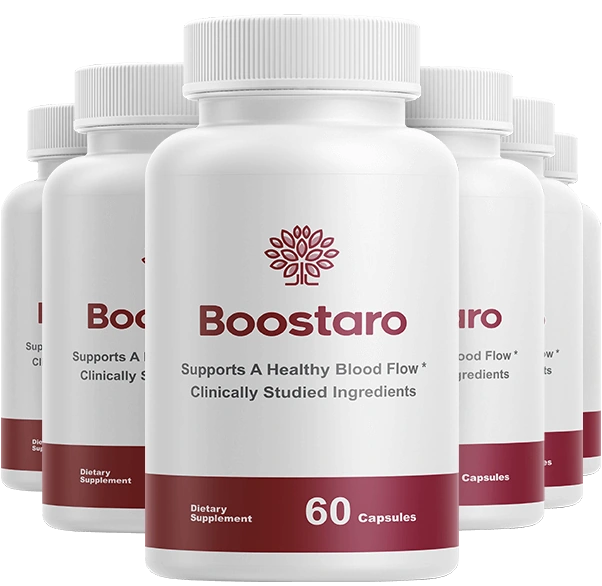
Boostaro is a twice-daily capsule that pairs CoQ10 with L-citrulline, pine bark and vitamin C, so cellular energy and blood flow are supported together. The six-bottle bundle is the best value at $49 per bottle, with free U.S. shipping and a 180-day guarantee.
Check today’s Boostaro pricing — from $49/bottleWhere does CoQ10 fit inside Boostaro’s formula?
CoQ10 is the energy-and-protection partner in a formula built to support healthy blood flow from several angles at once. L-citrulline feeds the nitric-oxide pathway that widens vessels; pine bark extract and vitamin C help defend that pathway; and CoQ10 sits alongside them, powering the cells and guarding against the oxidative stress that degrades nitric oxide. You can see how the pieces line up in Boostaro’s full ingredient list.
The logic is the same one behind the rest of the blend: a small team of nutrients supporting one pathway beats any single ingredient carrying the whole load. For the pathway itself, our guide to nitric oxide and male vitality walks through it, and the L-citrulline guide covers CoQ10’s main partner.

Can you get enough CoQ10 from food alone?
You can get CoQ10 from food, but only in modest amounts. The richest sources are organ meats such as heart and liver, followed by oily fish like sardines and mackerel, with smaller amounts in beef, poultry and nuts. For most people, everyday eating supplies far less than the amounts used in research — the main reason CoQ10 appears in supplements. Diet still matters enormously for circulation, which is why we cover it in our guide to the best foods for blood flow and circulation.
What CoQ10 is — and is not
It is worth being clear about what a nutrient like CoQ10 is and is not: it is not a drug, not a stimulant, and not a substitute for medical care. Its appeal is that it works with your body’s own machinery, gradually, as part of a healthy lifestyle. Where evidence is strong, such as CoQ10’s role in energy production, we say so; where marketing runs ahead of the research, such as absorption claims for specific forms, we flag it.
When should you talk to a doctor?
CoQ10 is generally well tolerated, with mild digestive upset the most commonly reported effect. Because it can interact with blood thinners such as warfarin and may add to the effect of blood-pressure medication, speak with your doctor first if you take those or other prescription medicines, or have a medical condition. It is intended for adults, and it supports a healthy lifestyle — it is not a treatment for any medical condition.
Frequently asked questions
What does CoQ10 do for men?
CoQ10 is a compound your cells use to turn nutrients into usable energy inside the mitochondria, and it also works as an antioxidant. Because tissues that never rest — the heart, blood-vessel walls and muscle — are packed with mitochondria, CoQ10 is especially relevant to the energy and circulation men associate with everyday vitality.
Does CoQ10 help blood flow?
CoQ10 supports blood flow indirectly. As an antioxidant it helps protect the vessel lining and the short-lived nitric oxide that keeps vessels relaxed and open. It does not replace the nitric-oxide pathway itself, which is why formulas pair it with ingredients like L-citrulline rather than using it alone.
What is the difference between ubiquinone and ubiquinol?
Ubiquinone is the oxidized form of CoQ10 and ubiquinol is the reduced, active form. Your body converts between the two as it uses CoQ10. Ubiquinone is the more common and well-studied supplement form; ubiquinol is sometimes marketed as better absorbed, though individual response varies.
How much CoQ10 do people take?
Research commonly studies CoQ10 in the range of roughly 100 to 200 mg per day, taken with food because it is fat-soluble. Supplement labels vary, so follow the directions on the product you choose and speak with your doctor if you take medication.
How long does CoQ10 take to work?
Blood levels of CoQ10 rise over days to a few weeks of consistent daily use, and the everyday energy and circulatory support people are after tends to build gradually rather than from a single dose. Individual results vary.
Is CoQ10 safe to take?
CoQ10 is generally well tolerated, with mild digestive upset the most commonly reported effect. Because it can interact with blood thinners and blood-pressure medication, speak with your doctor first if you take those or have a medical condition. It is intended for adults.
Try Boostaro risk-free for 180 days →
Boostaro is a dietary supplement, not a treatment for any medical condition. These statements have not been evaluated by the Food and Drug Administration. This product is not intended to diagnose, treat, cure or prevent any disease. Always consult a qualified healthcare professional about your individual needs.
References & further reading
- National Center for Complementary and Integrative Health (NCCIH). Coenzyme Q10. nccih.nih.gov/health/coenzyme-q10
- National Institutes of Health, Office of Dietary Supplements. Antioxidants — Fact Sheet. ods.od.nih.gov/factsheets/Antioxidants-HealthProfessional
- Examine.com. Coenzyme Q10 — evidence-based summary. examine.com/supplements/coenzyme-q10
- Mayo Clinic. Coenzyme Q10 — drugs and supplements. mayoclinic.org/drugs-supplements-coenzyme-q10
- Gao L, et al. Effects of coenzyme Q10 on vascular endothelial function in humans: a meta-analysis of randomized controlled trials. Atherosclerosis. 2012. pubmed.ncbi.nlm.nih.gov/22088605
- Daei S, et al. Effect of Coenzyme Q10 Supplementation on Vascular Endothelial Function: A Systematic Review and Meta-Analysis of Randomized Controlled Trials. High Blood Press Cardiovasc Prev. 2024. pubmed.ncbi.nlm.nih.gov/38630421
- Qu H, et al. Effects of Coenzyme Q10 on Statin-Induced Myopathy: An Updated Meta-Analysis of Randomized Controlled Trials. J Am Heart Assoc. 2018. pubmed.ncbi.nlm.nih.gov/30371340
These references describe the ingredients in general terms and do not constitute evidence that any product treats, cures or prevents any condition.
Keep reading: how L-citrulline supports healthy blood flow · nitric oxide and male vitality · best foods for blood flow · the Boostaro review · back to the blog.