L-citrulline vs L-arginine for blood flow: the Boostaro comparison

Updated August 2026 · reviewed by the Boostaro Research Team. We are an independent information resource, not a medical provider, and this article is educational rather than medical advice.
L-citrulline and L-arginine are the two amino acids at the centre of every serious blood-flow conversation, and they are easy to confuse because they feed the same pathway. The short version: L-arginine is the direct raw material your body turns into nitric oxide, while L-citrulline is the upstream amino acid the body converts toward arginine — and, counter-intuitively, citrulline is often the more effective way to raise arginine in the blood. That is exactly why Boostaro is built around L-citrulline.
L-citrulline vs L-arginine, honestly compared.
- The core difference
- Arginine is the direct nitric-oxide precursor; citrulline is converted to arginine first, one step upstream.
- Which the body absorbs better
- Citrulline, because much of an oral arginine dose is destroyed before it reaches the bloodstream.
- Which is better for blood flow
- For raising blood arginine efficiently, evidence generally favours citrulline — the reason formulas lead with it.
- Why Boostaro uses citrulline
- It supports the same nitric-oxide pathway more reliably, and pairs well with antioxidant partners.
If you have compared two blood-flow supplements and found one lists L-arginine while another lists L-citrulline, you have run into one of the most common questions in this category. Both target nitric oxide, both are sold as circulation support, and both have decades of research behind them — yet they are not interchangeable. This guide walks through the citrulline arginine difference in plain language, weighs which is better for the goal most men actually have, and explains where a formula like Boostaro lands and why.
What is a nitric oxide precursor, and why does it matter?
A nitric oxide precursor is any nutrient the body uses as raw material to produce nitric oxide, the short-lived signalling molecule that tells blood vessels to relax and widen. That widening — vasodilation — lowers resistance in the vessel and lets blood move more freely to the tissues that need it. Because both L-citrulline and L-arginine feed this pathway, both are marketed as circulation support, and the practical question is not whether they work on nitric oxide but how efficiently each one gets there.
Nitric oxide is made in the endothelium, the delicate one-cell-thick lining of your arteries. With age, stress, poor sleep and a sedentary routine, that lining tends to make less nitric oxide, and vessels can become less responsive. Supplying the pathway with the right precursor is a sensible, upstream way to support healthy circulation — and the two candidates handle that job differently.
How does the pathway actually run?
The sequence is short and worth memorising: dietary or supplemental L-citrulline is converted in the kidneys into L-arginine; the endothelium then uses that arginine, via an enzyme called nitric oxide synthase, to release nitric oxide; and nitric oxide signals the smooth muscle in the vessel wall to relax. Citrulline is the fuel for the fuel; arginine is the fuel itself.
What is the citrulline arginine difference in the body?
The real difference between L-citrulline and L-arginine is not what they do at the vessel wall — it is what happens on the way there. L-arginine, taken by mouth, runs into a wall of enzymes in the gut lining and the liver that break much of it down before it reaches general circulation. Scientists call this the “first-pass” effect, and it is the reason large oral doses of arginine often raise blood arginine less than you might expect. We look at what endothelial health means separately, if you want the longer version.
L-citrulline sidesteps that problem. It is absorbed well, escapes most of the first-pass breakdown, and is then converted to arginine in the kidneys where it enters circulation more reliably. The paradox that surprises most people is the result: taking citrulline can raise your blood arginine level more effectively than taking the same amount of arginine directly. You reach the destination by the back road because the main road is jammed. That puzzle is known as the L-arginine paradox, and Bode-Böger and colleagues, Pharmacology & Therapeutics (2007) discusses it in relation to the arginine/ADMA ratio.

| Feature | L-Citrulline | L-Arginine |
|---|---|---|
| Role in the pathway | Converted to arginine, then nitric oxide | Direct precursor to nitric oxide |
| First-pass breakdown | Largely bypassed | Substantial in gut & liver |
| Effect on blood arginine | Raises it efficiently, even at modest doses | Less efficient; large doses needed |
| Typical tolerability | Generally well tolerated | GI upset more common at high doses |
| Best-known food source | Watermelon | Nuts, seeds, meat, dairy |
| Common form on labels | L-citrulline or citrulline malate | L-arginine or arginine HCl |
Which is better for blood flow: citrulline or arginine?
For the specific goal of supporting healthy blood flow, the weight of evidence generally favours L-citrulline over L-arginine — not because arginine is useless, but because citrulline is the more dependable way to raise the arginine your endothelium actually uses. Arginine still works; it simply has to fight through the first-pass barrier, which is why studies that use it often need larger doses to move the needle, and larger doses are where the stomach complaints tend to appear. In a controlled pharmacokinetic study, Schwedhelm and colleagues, British Journal of Clinical Pharmacology (2008) found that oral L-citrulline raised plasma arginine more effectively than the same dose of L-arginine.
It is fair to keep the honesty dial turned up here: much of this research measures markers such as blood arginine, flow-mediated dilation or exercise performance rather than long-term everyday outcomes, and results vary between individuals. Neither amino acid is a medicine, and neither treats a medical condition. What the literature supports is a mechanism — a real, well-mapped pathway you can feed — and, on the narrow question of which precursor feeds it more efficiently, citrulline tends to come out ahead. Khalaf and colleagues, Nutrients (2019) reviewed the trials of oral L-arginine and L-citrulline supplementation on blood pressure specifically.
See the exact dose in Boostaro →
How much of each do people take?
Dosing is where the citrulline arginine difference shows up on the label. Because arginine loses so much to first-pass metabolism, studies frequently use several grams — sometimes quite high amounts — to raise blood levels, and that is also where digestive side effects cluster. Citrulline, being more efficient, is commonly studied at a few grams per day, often as citrulline malate, which is citrulline bound to malic acid.
Timing matters less than consistency. Blood arginine rises within a couple of hours of a citrulline dose, but the everyday circulatory support most men are after is the kind that builds over weeks of daily use, not from a single serving. Because labels differ so much between products, the only sensible rule is to follow the directions on whatever you choose — and to remember that a bigger number on the tub is not automatically better if a large share of it never reaches your blood.
| Timeframe | What is happening | What to expect |
|---|---|---|
| Within hours | Blood arginine rises after a citrulline dose | Short-term shift; not the main goal |
| First 1–2 weeks | Daily intake becomes a routine | Building consistency; subtle changes |
| 3–8 weeks | Pathway receives steady support | Where most people judge everyday benefit |
| Ongoing | Consistency held alongside lifestyle | Support is maintained, not banked |
Why is Boostaro built around L-citrulline?
Boostaro is built around L-citrulline because it is the more efficient route to the same nitric-oxide pathway that L-arginine targets, and because it plays well with partners. Nitric oxide is reactive and short-lived, and everyday oxidative stress can degrade it before it does its job — so raising the precursor is only half the task. The other half is protecting the endothelium and the nitric oxide it makes.
That is why Boostaro pairs citrulline with antioxidant pine bark extract and vitamin C, which help defend the vessel lining, and with CoQ10 and magnesium, which support the energy and muscle function behind healthy vascular tone. The design goal is a small team of nutrients supporting one pathway from several angles, taken as two capsules a day so support stays steady rather than spiking and fading. You can see how the pieces fit together in the full Boostaro formula, and we go deeper on the star ingredient in our guide to how L-citrulline supports healthy blood flow. Our guide to CoQ10 versus ubiquinol goes into this in more detail.

Built around the smarter precursor
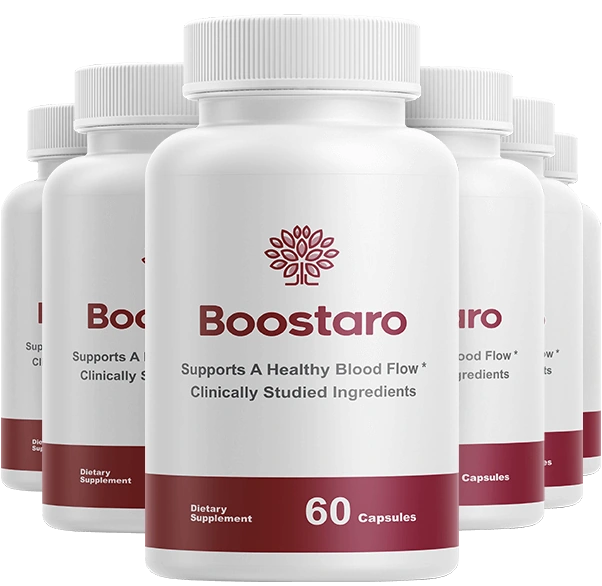
Boostaro is a twice-daily capsule that leads with L-citrulline — the more efficient nitric-oxide precursor — alongside pine bark, vitamin C and CoQ10. The six-bottle bundle is the best value at $49 per bottle, with free U.S. shipping and a 180-day guarantee.
Check today’s Boostaro pricing — from $49/bottleCan you get either amino acid from food?
You can get both from food, but neither is easy to reach in research-level amounts through diet alone. Watermelon is the standout dietary source of citrulline — the name even comes from Citrullus, the Latin for watermelon — with smaller amounts in cucumber and other gourds. Arginine is more widely available, in nuts, seeds, meat and dairy, but the first-pass problem still applies to the arginine you eat, just as it does to a capsule.
Food remains the foundation of healthy circulation regardless of which amino acid you focus on, which is why we cover it in detail in our guide to the best foods for blood flow and circulation. A supplement is best understood as a top-up to a good diet, not a replacement for one.
When should you talk to a doctor?
Both L-citrulline and L-arginine are generally well tolerated, but because they act on blood vessels, they are not right for everyone without a conversation first. Speak with your doctor before using either if you take blood-pressure medication, nitrates, or medication for erectile function, or if you have a heart condition. Both are intended for healthy adults, and both are a support to a healthy lifestyle rather than a treatment for any medical condition. If you are unsure which is appropriate for you, that decision belongs with a qualified professional who knows your history.
Frequently asked questions
What is the difference between L-citrulline and L-arginine?
Both are amino acids that feed the nitric-oxide pathway, but they enter it at different points. L-arginine is the direct precursor the body uses to make nitric oxide, while L-citrulline sits one step upstream and is converted into arginine in the kidneys. The practical difference is absorption: much of an oral arginine dose is broken down before it reaches the blood, whereas citrulline largely bypasses that.
Which is better for blood flow, L-citrulline or L-arginine?
For raising blood arginine levels efficiently, research generally favours L-citrulline because it avoids much of the first-pass breakdown that limits oral arginine. That is why modern blood-flow formulas, Boostaro included, are usually built around citrulline rather than arginine itself.
Is L-citrulline a nitric oxide precursor?
Indirectly, yes. L-citrulline is converted to L-arginine, and L-arginine is the direct precursor the endothelium uses to produce nitric oxide. So citrulline is best described as fuel for the fuel: it tops up the arginine your body needs to make nitric oxide.
Can you take L-citrulline and L-arginine together?
Some people combine them, and small studies have looked at the pairing, but most well-formulated products lead with citrulline because it does the heavy lifting of raising arginine. If you are considering a stack and take medication, speak with your doctor first.
How much L-citrulline and L-arginine do people take?
Research on citrulline commonly uses a few grams per day, sometimes as citrulline malate, while arginine studies often use larger amounts to overcome first-pass losses. Supplement labels vary, so follow the directions on the product you choose.
Why is Boostaro built around L-citrulline instead of L-arginine?
Boostaro is built around L-citrulline because it is the more efficient way to support blood arginine and, through it, the nitric-oxide pathway your vessels use to relax and widen. Citrulline is paired with pine bark, vitamin C and CoQ10 so the pathway is supported from several angles.
Try Boostaro risk-free for 180 days →
Boostaro is a dietary supplement, not a treatment for any medical condition. These statements have not been evaluated by the Food and Drug Administration. This product is not intended to diagnose, treat, cure or prevent any disease. Always consult a qualified healthcare professional about your individual needs.
References & further reading
- Examine.com. Citrulline — evidence-based summary. examine.com/supplements/citrulline
- Examine.com. Arginine — evidence-based summary. examine.com/supplements/arginine
- Schwedhelm E, et al. Pharmacokinetic and pharmacodynamic properties of oral L-citrulline and L-arginine: impact on nitric oxide metabolism. Br J Clin Pharmacol. 2008. pubmed.ncbi.nlm.nih.gov/17662090
- Bode-Böger SM, et al. The L-arginine paradox: Importance of the L-arginine/asymmetrical dimethylarginine ratio. Pharmacol Ther. 2007. pubmed.ncbi.nlm.nih.gov/17482266
- National Center for Complementary and Integrative Health (NCCIH). Dietary and Herbal Supplements. nccih.nih.gov/health/dietary-and-herbal-supplements
- National Institutes of Health, Office of Dietary Supplements. Vitamin C — Fact Sheet for Health Professionals. ods.od.nih.gov/factsheets/VitaminC-HealthProfessional
- Khalaf D, et al. The Effects of Oral L-Arginine and L-Citrulline Supplementation on Blood Pressure. Nutrients. 2019. pubmed.ncbi.nlm.nih.gov/31336573
These references describe the ingredients in general terms and do not constitute evidence that any product treats, cures or prevents any condition.
Keep reading: how L-citrulline supports healthy blood flow · nitric oxide and male vitality · back to the Boostaro blog · homepage.