What is endothelial health? A Boostaro blood flow guide

Updated August 2026 · reviewed by the Boostaro Research Team. We are an independent information resource, not a medical provider, and this article is educational rather than medical advice.
Endothelial health describes how well the thin lining of your blood vessels — the endothelium — does its everyday job of sensing blood flow and releasing nitric oxide so vessels relax and widen. It is the quiet foundation beneath the phrase “healthy blood flow,” and it is the exact pathway a formula like Boostaro is designed to support.
Endothelial health, in one place.
- What it is
- How well the endothelium — the single-cell lining inside every vessel — senses flow and releases nitric oxide.
- What it governs
- Vessel relaxation (vasodilation), so blood moves freely at the level of the vessel wall.
- What strains it
- Age, smoking, high blood pressure and sugar, inactivity, poor sleep and oxidative stress.
- Where nutrients fit
- Antioxidants and L-citrulline are studied for their role in protecting and feeding the nitric-oxide pathway.
- Honest caveat
- Nutrients support a healthy lifestyle; they are not a treatment for any medical condition.
Most circulation advice skips a step: it talks about blood flow without explaining the living tissue that actually controls it. That tissue is the endothelium, and understanding it makes everything else — diet, exercise and why a formula like Boostaro is built the way it is — click into place. This guide keeps it plain: what the endothelium is, how it makes nitric oxide, what wears it down, and how everyday nutrients relate to its work.

What is the endothelium, and where is it?
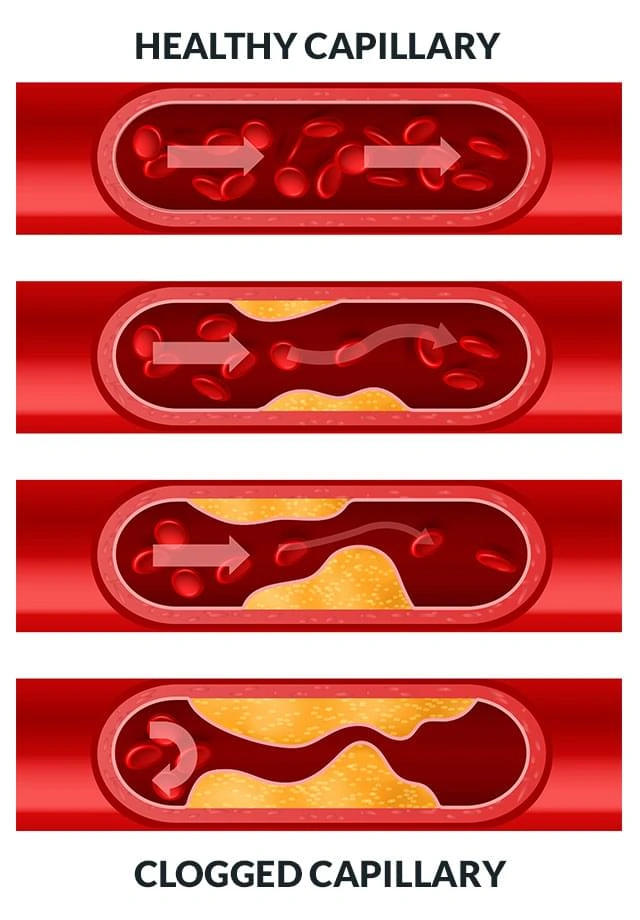
The endothelium is a single-cell-thick layer that lines the entire inside of every blood vessel, from the widest artery to the narrowest capillary. It is not a passive coating; it is an active, sensing tissue that reacts continuously to the blood moving across it. Because it lines the whole vascular tree, its total surface area is enormous, and its condition touches circulation everywhere in the body.
Physiologists sometimes call it the body’s largest endocrine organ, because it releases signalling molecules into the blood. Chief among them is nitric oxide — the messenger that tells vessels to relax. When people talk about “vascular wellness,” they are, whether they know it or not, talking about how well this lining is functioning.
Why does the blood vessel lining matter so much?
The blood vessel lining matters because it is the interface where the decision to open or narrow a vessel is actually made. A healthy endothelium responds to demand: when a muscle needs more oxygen, the lining senses the increased flow and widens the vessel to meet it. A strained endothelium responds sluggishly, so vessels stay stiffer and blood moves less freely even when the body is asking for more. Widmer and Lerman, Global Cardiology Science & Practice (2014) reviews the relationship between endothelial dysfunction and cardiovascular disease.
How does the endothelium make nitric oxide?
The endothelium makes nitric oxide by sensing the physical drag of blood flowing across its surface and converting the amino acid L-arginine into nitric oxide using an enzyme called endothelial nitric oxide synthase. That nitric oxide then diffuses into the muscle layer of the vessel wall and signals it to relax — a process called vasodilation that widens the vessel and lowers resistance to flow. Our guide to L-citrulline compared with L-arginine goes into this in more detail.
It is an elegant feedback loop. Movement increases flow; flow stimulates the lining; the lining releases nitric oxide; the vessel opens. This is why regular exercise is one of the most reliable ways to support endothelial function: it repeatedly asks the lining to do its job. For a deeper look at that signalling molecule itself, our nitric oxide and male vitality guide follows the pathway from the vessel wall to everyday energy.
What is endothelial function versus dysfunction?
Endothelial function is the lining’s ability to trigger appropriate vasodilation on demand, while endothelial dysfunction describes a state in which that response is blunted and the vessel does not relax as it should. Dysfunction is not a single disease but a description of how the tissue is behaving, and researchers study it as an early marker of how the whole vascular system is faring.
What damages the endothelium?
The endothelium is worn down by a familiar list of pressures: ageing, smoking, high blood pressure, high blood sugar, a sedentary routine, poor sleep and chronic oxidative stress. Many of these overlap and reinforce one another, and most are shaped by everyday choices rather than fixed by fate.
The common thread is oxidative stress. Nitric oxide is a reactive, short-lived molecule, and excess free radicals can degrade it before it does its work — effectively muffling the lining’s signal. That is why an anti-oxidant-rich diet and lifestyle sit at the centre of endothelial care, and why antioxidant nutrients keep appearing in blood-flow formulas.
| Factor | How it strains the endothelium | Everyday lever |
|---|---|---|
| Ageing | Nitric-oxide output tends to decline over time | Stay active; support the pathway |
| Smoking | Introduces oxidative stress that degrades nitric oxide | Avoid or quit |
| High blood pressure | Mechanical strain on the vessel lining | Diet, movement, medical care |
| High blood sugar | Promotes inflammation and oxidative damage | Balanced diet; stay active |
| Inactivity | Rarely stimulates flow-driven nitric-oxide release | Regular exercise |
| Poor sleep | Disrupts recovery and raises oxidative load | Consistent sleep routine |
See the exact dose in Boostaro →
How do nutrients relate to endothelial health?
Nutrients relate to endothelial health mainly by supporting the two ends of the nitric-oxide pathway: supplying the raw material the lining converts into nitric oxide, and protecting that nitric oxide from oxidative breakdown once it is made. No nutrient rebuilds a vessel, but several are studied for their role in this everyday chemistry.
On the supply side, L-citrulline is converted to L-arginine, the direct precursor the endothelium uses — a route we cover in detail in how L-citrulline supports healthy blood flow. On the protection side, antioxidants such as vitamin C and pine bark extract are researched for helping shield nitric oxide from free radicals, while CoQ10 and magnesium are studied for the cellular energy and muscle function behind healthy vascular tone. Diet does the heavy lifting; our roundup of the best foods for blood flow and circulation shows where to start. The nitric oxide synthase enzymes that produce it are reviewed in detail by Förstermann and Sessa, European Heart Journal (2012).
Where does Boostaro fit?
Boostaro fits as a daily way to support that same pathway from several angles at once. It is built around L-citrulline to feed the nitric-oxide route, and pairs it with antioxidant nutrients — pine bark extract, vitamin C and CoQ10 — chosen for their studied roles in protecting the lining and the nitric oxide it produces. The idea is not a single hero ingredient but a small, coordinated team supporting one job. On the nutrition side, Ashor and colleagues, British Journal of Nutrition (2015) pooled randomised trials of vitamin C and vitamin E supplementation and endothelial function.
Support the pathway daily
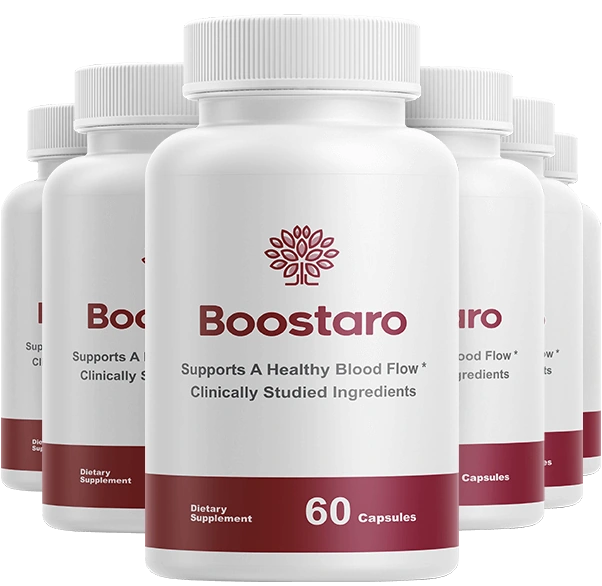
Boostaro is a twice-daily capsule built around L-citrulline, pine bark, vitamin C and CoQ10 — nutrients chosen for the nitric-oxide pathway the endothelium uses. The six-bottle bundle is the best value at $49 per bottle, with free U.S. shipping and a 180-day guarantee.
Check today’s Boostaro pricing →How can you support endothelial health day to day?
You support endothelial health day to day by giving the lining regular reasons to release nitric oxide and fewer reasons to lose it. That means moving often, eating in a way that lowers oxidative load, sleeping well, and not smoking — the unglamorous basics that repeatedly outperform any single supplement.
Movement is the anchor, because flow-driven stimulation is exactly what the endothelium is built to respond to. Colourful, plant-rich meals supply the antioxidants that help protect nitric oxide, and steady sleep gives the whole system time to recover. A well-formulated supplement is a complement to that foundation, never a replacement for it.
| Timeframe | What is happening | What to expect |
|---|---|---|
| Each session | Exercise drives flow-stimulated nitric-oxide release | A short-term, acute response |
| First 1–2 weeks | Habits and daily intake become consistent | Building a routine; subtle changes |
| 3–8 weeks | The pathway receives steady, repeated support | Where most people judge everyday benefit |
| Ongoing | Consistency maintained alongside lifestyle | Support is maintained, not banked |
Is endothelial health only about the heart?
Endothelial health is not only about the heart, because the same lining runs through every vessel in the body. When the endothelium is responsive, circulation to muscles, brain and other tissues all benefit from the same well-tuned signalling. That whole-body reach is why supporting vascular wellness tends to show up as broad, everyday vitality rather than one narrow effect.
When should you talk to a doctor?
You should talk to a doctor before leaning on any supplement if you take blood-pressure medication, nitrates or medication for erectile function, or if you have a heart condition — because nutrients that touch the nitric-oxide pathway can interact with those. Endothelial dysfunction is also something a clinician can assess properly, so persistent circulation concerns deserve a professional conversation rather than a self-diagnosis.
Nutrients like the ones in Boostaro are intended for adults and are a support to a healthy lifestyle, not a treatment for any medical condition. Framed that way, they are one sensible piece of a bigger picture.
Frequently asked questions
What is endothelial health in simple terms?
Endothelial health describes how well the thin lining of your blood vessels, the endothelium, does its job of sensing blood flow and releasing nitric oxide so vessels relax and widen. When that lining is working well, blood moves freely; when it is under strain, vessels become stiffer and less responsive.
What is the endothelium and where is it?
The endothelium is a single-cell-thick layer that lines the entire inside of every blood vessel, from the largest artery to the smallest capillary. Laid flat it would cover a large surface area, and it acts as an active, sensing organ rather than a passive pipe lining.
How does the endothelium control blood flow?
The endothelium senses the force of blood moving across it and releases nitric oxide, which signals the muscle in the vessel wall to relax. That relaxation, called vasodilation, widens the vessel and lowers resistance so blood flows more easily to where it is needed.
What damages the endothelium?
Age, smoking, high blood pressure, high blood sugar, a sedentary routine, poor sleep and chronic oxidative stress all place strain on the endothelium and can lower the nitric oxide it produces. Many of these factors are influenced by everyday lifestyle choices.
Can nutrients support endothelial health?
Some nutrients are studied for their role in the pathways the endothelium uses. Antioxidants such as vitamin C and pine bark extract are researched for helping protect nitric oxide from oxidative breakdown, while L-citrulline feeds the pathway. These support a healthy lifestyle rather than replace medical care. We look at pine bark extract and blood flow separately, if you want the longer version.
How does Boostaro relate to endothelial health?
Boostaro is a dietary supplement built around L-citrulline plus antioxidant nutrients such as pine bark extract, vitamin C and CoQ10, chosen for their role in the nitric-oxide pathway the endothelium relies on. It is intended to support a healthy lifestyle and is not a treatment for any condition.
Try Boostaro risk-free for 180 days →
Boostaro is a dietary supplement, not a treatment for any medical condition. These statements have not been evaluated by the Food and Drug Administration. This product is not intended to diagnose, treat, cure or prevent any disease. Always consult a qualified healthcare professional about your individual needs.
References & further reading
- National Center for Complementary and Integrative Health (NCCIH). Antioxidants: In Depth. nccih.nih.gov/health/antioxidants-in-depth
- National Institutes of Health, Office of Dietary Supplements. Vitamin C — Fact Sheet for Health Professionals. ods.od.nih.gov/factsheets/VitaminC-HealthProfessional
- Widmer RJ, Lerman A. Endothelial dysfunction and cardiovascular disease. Glob Cardiol Sci Pract. 2014. pubmed.ncbi.nlm.nih.gov/25780786
- Förstermann U, Sessa WC. Nitric oxide synthases: regulation and function. Eur Heart J. 2012. pubmed.ncbi.nlm.nih.gov/21890489
- Examine.com. Citrulline — evidence-based summary. examine.com/supplements/citrulline
- Mayo Clinic. Exercise: 7 benefits of regular physical activity. mayoclinic.org/healthy-lifestyle/fitness
These references describe the endothelium and the ingredients in general terms and do not constitute evidence that any product treats, cures or prevents any condition.
Keep reading: nitric oxide and male vitality · how L-citrulline supports healthy blood flow · back to the Boostaro blog · homepage.